Almost every garden in East Devon has at least one hedge, and most have several. Front boundaries, rear boundaries, between neighbours, around patios, lining driveways. They provide privacy, shelter from the wind, structure to the garden, and vital habitat for birds and wildlife. But they need regular cutting to stay dense, healthy and looking good.
I provide hedge cutting and trimming across East Devon as a standalone service or as part of regular garden maintenance. For most domestic hedges I use quiet battery-powered hedge trimmers. For taller or thicker hedges that need more power, I have the right kit for the job. All cuttings are cleared up and removed as standard.
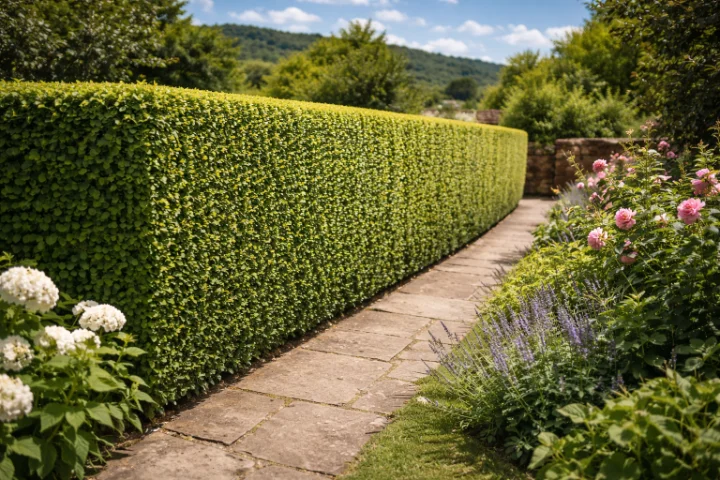
A clean, crisp hedge line — the difference a proper trim makes to the whole garden
Nesting Bird Checks as Standard
This is not optional and it is not something I charge extra for. Before I cut any hedge, I check it for nesting birds. It is a legal requirement under the Wildlife and Countryside Act 1981, but more than that, it is the right thing to do. If I find an active nest, that section of hedge is left alone until the chicks have fledged. No exceptions.
The main nesting season runs from March to August, though some species start earlier and finish later. Outside of nesting season, hedges can be cut freely and this is when the main structural cuts are best done. During the season, light trimming of new growth is usually fine as long as I check first.
When Should Hedges Be Cut?
The timing depends on the type of hedge and what you want from it:
Formal Hedges (Privet, Box, Yew, Laurel, Beech)
Most formal hedges benefit from two cuts per year. The first in late spring or early summer once the main flush of growth has happened and nesting birds have been checked for. The second in early autumn, typically September, to tidy up summer growth and leave the hedge looking sharp through winter. Yew and box can handle a single cut in late summer if you prefer a lower-maintenance approach.
Fast-Growing Hedges (Leylandii, Cupressus, Thuja)
These need cutting two to three times a year to stay under control. Left too long between cuts, conifer hedges become bare and woody inside and will not grow back from old wood. Regular trimming while the growth is still green keeps them dense and manageable. If you have an overgrown conifer hedge, I can reduce it gradually over successive cuts, but there are limits to how far back conifers can be taken.
Coastal Windbreak Hedges (Escallonia, Griselinia, Pittosporum, Tamarisk)
Common in Exmouth, Budleigh Salterton, Sidmouth and Beer where they work hard as windbreaks against the salt-laden south-westerlies. These species are generally forgiving and respond well to a good trim once or twice a year. Keeping them dense is the priority because a thin windbreak hedge is worse than useless. I trim to encourage bushy growth from the base up rather than letting them become leggy and bare at the bottom.
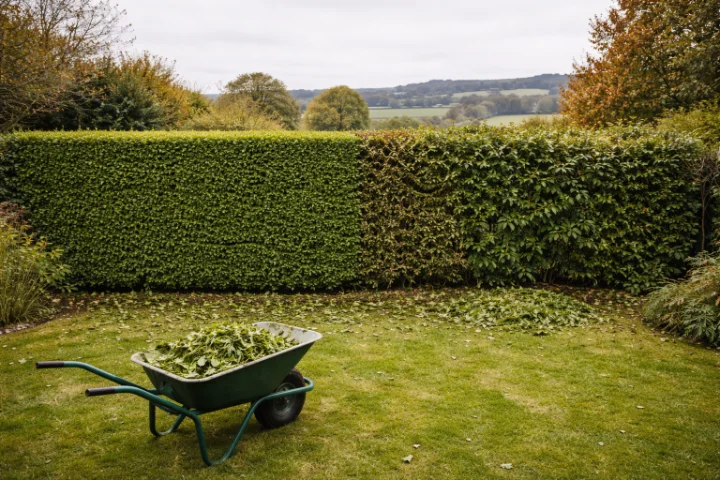
Tall boundary hedges — I carry a long-reach trimmer for hedges up to about 3 metres
Native Mixed Hedges (Hawthorn, Blackthorn, Hazel, Field Maple)
If you are lucky enough to have a native hedge, it is one of the most valuable wildlife features in your garden. These hedges produce berries, blossom and nesting sites. They are best cut once a year in late winter, after the berries have been eaten and before nesting starts. I cut native hedges sympathetically, keeping them thick at the base and not trimming them into rigid formal shapes.
What Size Hedges Can I Handle?
I cover the full range of domestic hedges:
- Low hedges and edging (under 1 metre): box, lavender, rosemary borders. Quick to trim and tidy
- Medium boundary hedges (1 to 2 metres): the most common type in East Devon gardens. Privet, laurel, beech, escallonia. Straightforward work with a standard hedge trimmer
- Tall hedges (2 to 3 metres): I carry a long-reach trimmer for taller hedges that can be cut from the ground. This avoids the need for ladders in most cases and is safer and more efficient
- Very tall or wide hedges (over 3 metres): if a hedge is too tall or wide to reach safely from the ground, I will be honest about it. Some hedges genuinely need a tree surgeon or specialist with platform access. I would rather tell you that than do a bad job or put anyone at risk
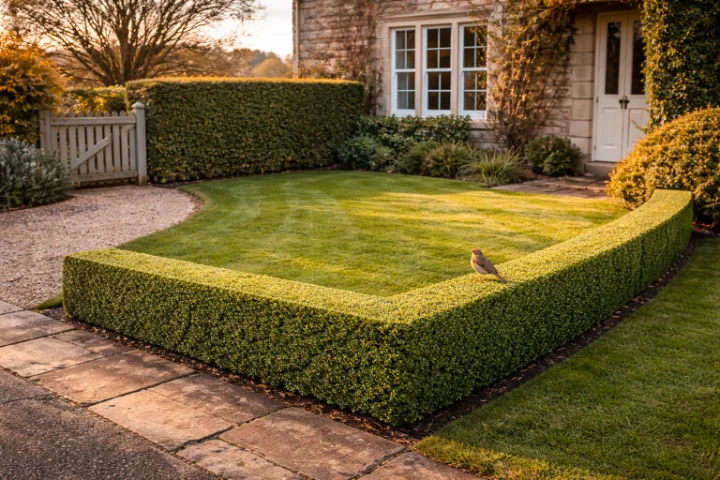
The finished result — clean lines, clippings cleared, garden looking sharp
What is Included
- Nesting bird check before any cutting
- Trimming to a clean, even finish
- Top, sides and face all cut (not just the bits you can see from the house)
- All cuttings gathered, cleared and removed
- Paths and borders swept or raked clean afterwards
- Advice on timing and frequency for your specific hedge species
Pricing
Hedge cutting is charged at £30 per hour. A single medium-sized boundary hedge typically takes around an hour including clearing up. A full garden with hedges on multiple boundaries could be a half-day job. I will give you an honest estimate when I visit and there are never any surprises on the bill. Green waste removal is included in the price.
Works Well With
Hedge cutting naturally pairs with other garden maintenance. Most customers have their hedges done during a regular visit alongside lawn mowing and border care. Alternatively, you can book a standalone hedge-cutting visit once or twice a year to keep everything in shape.
Get a Free Quote
Call 07767 241844 or fill in the quote form for a free, no-obligation visit. I will come and look at your hedges, talk through what they need and when, and give you an honest price. No pressure, no hard sell.